2026 How to Choose the Best Tri-Proof Lighting Fixtures for Your Needs?
In today's world, businesses demand robust and efficient lighting solutions. Tri-Proof Lighting Fixtures have emerged as a vital choice in various sectors, especially in challenging environments. According to a report by MarketsandMarkets, the global tri-proof lighting market is expected to reach $4.3 billion by 2026, indicating significant growth driven by urbanization and energy efficiency demands.
Industry expert Dr. Alex Thompson highlights, "Choosing the right tri-proof lighting fixture is crucial for durability and performance." This statement emphasizes that not all fixtures are created equal. Factors like installation location and environmental conditions greatly influence the decision. It’s important to consider how harsh conditions may impact your selection process.
While many prioritize cost, it’s essential to look beyond price. Long-term value comes from selecting fixtures that withstand elements like moisture and dust. Such reflections can lead to better purchasing decisions. Opting for high-quality tri-proof lighting fixtures is an investment in safety and efficiency.

Understanding Tri-Proof Lighting Fixtures and Their Benefits
Tri-proof lighting fixtures are designed for challenging environments. They resist water, dust, and impact. These features make them ideal for industrial sites, parking lots, and even kitchens. They can withstand harsh conditions, ensuring safety and durability. They offer bright and energy-efficient illumination, which is crucial for visibility.
When choosing a tri-proof fixture, consider the wattage and brightness level. Too bright can be overwhelming in small areas. The size is also important. If the fixture is too large, it can become an eyesore. Look for options with adjustable features to meet your specific needs.
Tips: Always check for energy ratings. This can save costs in the long run. Install fixtures at appropriate heights for optimal light distribution. A placement mistake can lead to dark spots. Take time to evaluate your space. Not all fixtures suit every environment, and that’s okay. Adjustments may be needed later. Reflect on your needs before purchasing.
Key Features to Consider When Selecting Tri-Proof Lighting
When choosing tri-proof lighting fixtures, several key features deserve attention. Consider the level of waterproofing required. Common ratings include IP65 and IP66, indicating protection against water and dust. A report by the Lighting Research Institute shows that about 40% of lighting failures in outdoor settings stem from moisture damage. Selecting a fixture with a suitable IP rating can significantly extend its lifespan.
Additionally, evaluate the fixture's energy efficiency. LED tri-proof lights are often favored due to their low energy consumption. According to a study, switching from traditional lighting to LED can reduce energy use by 50-70%. However, some consumers overlook the long-term cost benefits of energy-efficient options. It's essential to consider your specific environment—tolerable temperatures and potential exposure to chemicals may also influence the choice.
Finally, think about installation and maintenance. Some fixtures require professional installation, which can increase overall costs. Maintenance needs can vary widely. Data from industry surveys suggests that 30% of facilities underestimate the importance of maintenance in their cost projections. A thoughtful approach to each of these aspects can make a notable difference in the longevity and performance of tri-proof lighting in your space.
2026 How to Choose the Best Tri-Proof Lighting Fixtures for Your Needs? - Key Features to Consider When Selecting Tri-Proof Lighting
| Feature |
Description |
Importance |
Recommendation |
| IP Rating |
Ingress Protection rating indicating resistance to dust and water. |
High |
Choose IP65 or higher for outdoor and wet areas. |
| Material |
Durable materials like polycarbonate or aluminum that withstand harsh conditions. |
Medium |
Look for corrosion-resistant options. |
| Light Output |
Measured in lumens; indicates brightness level. |
High |
Determine your space requirements to choose the right lumen output. |
| Energy Efficiency |
How much light output is provided per watt of energy consumed. |
High |
Select LED options for better energy efficiency. |
| Mounting Options |
Different installation types like surface, suspended, or wall-mounted. |
Medium |
Choose based on your specific installation setting. |
| Warranty |
Manufacturer's guarantee period for defects and performance. |
High |
Look for at least a 2-year warranty for peace of mind. |
Assessing the Different Types of Tri-Proof Lighting Fixtures
When considering tri-proof lighting fixtures, it’s crucial to evaluate their types based on your needs. Tri-proof lights are designed to be dustproof, waterproof, and corrosion-resistant. This makes them ideal for various settings, such as warehouses, parks, or food processing areas. Each type serves specific functions and environments.
LED tri-proof fixtures are popular due to their efficiency. They provide bright illumination while consuming less energy. Many users appreciate their longevity. However, some may find the upfront cost daunting. Fluorescent options are also available. They are less costly initially but may require more frequent replacements. Assessing the total lifecycle cost is essential here.
Another option is vapor-tight fixtures. They excel in environments with high moisture levels. However, they might not be as durable as LED models. When selecting the best type, consider the installation area. Understand the ambient conditions and required brightness levels. Choosing the right fixture can greatly enhance functionality, but it’s easy to overlook specific needs and environmental factors.
2026 How to Choose the Best Tri-Proof Lighting Fixtures for Your Needs?
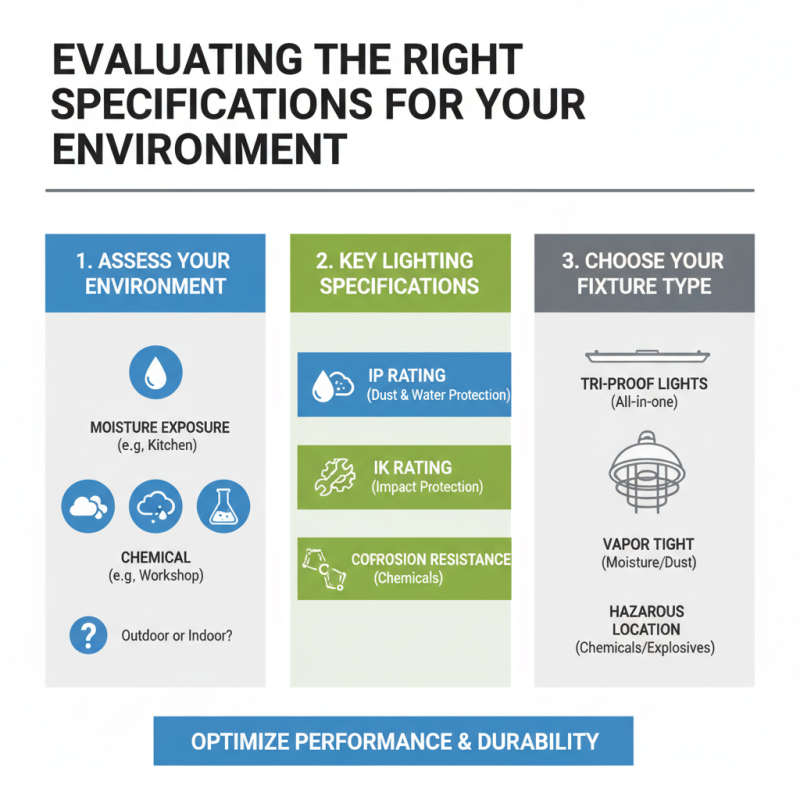
Evaluating the Right Specifications for Your Environment
Choosing tri-proof lighting fixtures requires careful consideration of several key specifications. Begin by assessing your environment. Think about exposure to moisture, dust, or chemicals. Do you need lighting for a kitchen, workshop, or outdoor area? Each space has unique challenges and demands.
Next, consider the brightness level needed. Lumens determine how much light is emitted. For task-oriented spaces, higher lumens are vital. However, too much brightness can be overwhelming, causing discomfort. Dimming capabilities might be an option to explore. Also, wattage affects energy consumption, so finding a balance is crucial.
Finally, pay attention to durability. Check materials and ratings. Fixtures should withstand harsh conditions without failure. However, it’s also worth reflecting on the maintenance aspect. Some materials may require more upkeep than others. A decision should balance longevity with practical care needs. Seek options that meet your environment’s demands while fitting your long-term plans.
Best Practices for Installation and Maintenance of Tri-Proof Lights
Tri-proof lighting fixtures are essential for various environments. They need specific attention during installation and maintenance. Proper installation ensures longevity. It also guarantees optimal performance.
When installing tri-proof lights, ensure the surface is clean and dry. Use appropriate mounting hardware. If unsure, consult the manufacturer's installation guide. A slight misalignment can cause inefficient lighting. Remember to check for adequate power supply. Sometimes, an overlooked wiring issue can create problems.
Maintenance is just as crucial. Regularly inspect fixtures for dust and water damage. Accumulated dirt affects brightness. Replace any damaged components promptly. Consider using a damp cloth for cleaning. Avoid harsh chemicals that could harm the light's surface. Creating a schedule for maintenance can help. Set reminders to check your fixtures every few months.
Tips: Always wear gloves while handling lights. This prevents oil transfer from your hands. It’s easy to overlook small details, but they matter. Also, document any issues and repairs made. This can help in future maintenance decisions. Taking these steps may seem tedious, yet they are vital for optimal light performance.



 Email
Email Whatsapp
 WeChat